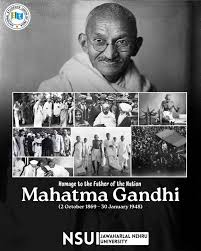
Introduction: The Making of a Mahatma
Mahatma Gandhi: The Apostle of Truth and Non-Violence(1869) Mohandas Karamchand Gandhi, known to the world as Mahatma (Great Soul), stands as one of the most influential figures of the 20th century. Born on October 2, 1869, in the small coastal town of Porbandar, India, his journey from a shy, average student to the “Father of the Nation” is a testament to the power of self-transformation. Gandhi did not just lead a political revolution; he led a moral one, proving that the most powerful weapon against oppression is not a sword, but the soul.
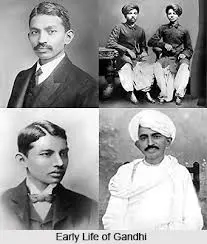
1.Early Years and the Search for Identity
Gandhi was raised in a devout Hindu household. His mother, Putlibai, was deeply religious, often undertaking long fasts. This early environment instilled in him the values of Ahimsa (non-violence) and vegetarianism.
At 18, Gandhi sailed to London to study law at University College London. This period was a struggle for identity; he briefly tried to mimic the “English Gentleman,” taking dancing and violin lessons, before realizing that true strength came from within. He began studying the Bhagavad Gita and the Bible, finding a common thread of selfless service in both.
2. The South African Crucible (1893–1914)
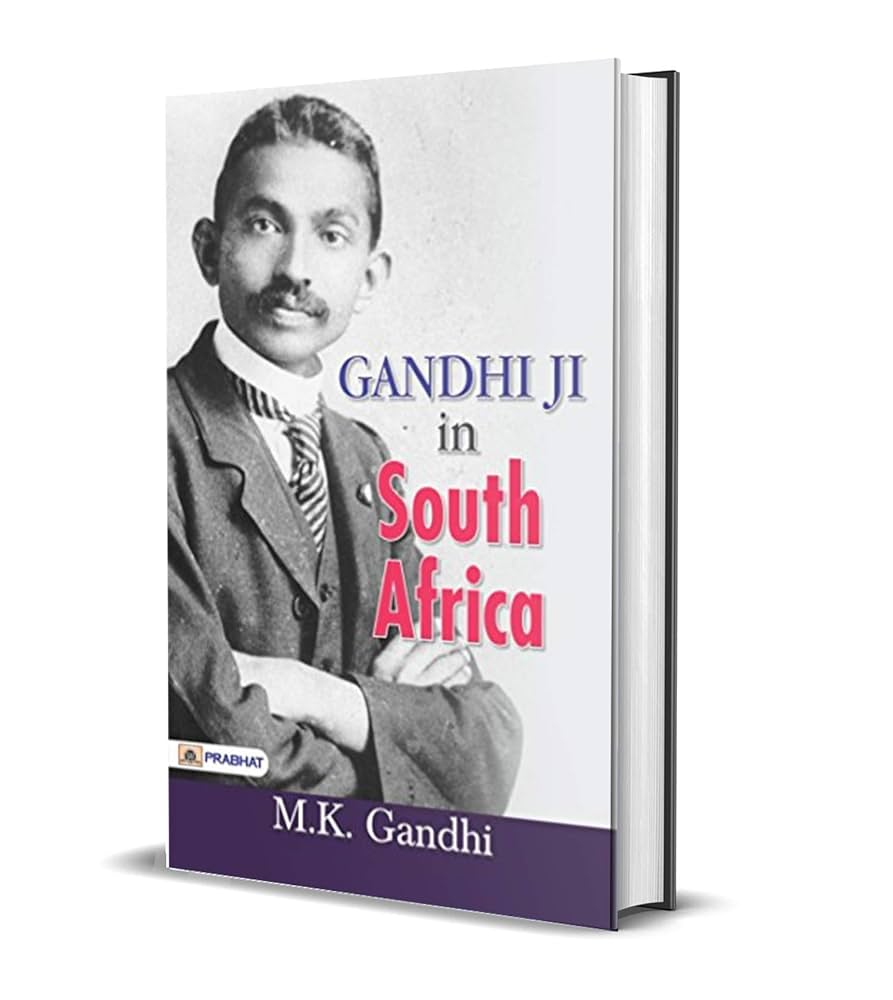
The “Mahatma” was arguably born in South Africa. Arriving there in 1893 to handle a legal case, he was immediately confronted with “color prejudice.” The famous incident at Pietermaritzburg, where he was thrown off a train for refusing to move to the third-class carriage, was his “moment of truth.”
Instead of returning to India, he stayed for 21 years to fight for the rights of Indians. It was here that he developed Satyagraha (Truth-Force). He realized that by Refusing to obey unjust laws and accepting the punishment without retaliation, one could appeal to the conscience of the oppressor.
3. Return to India and Grassroots Leadership
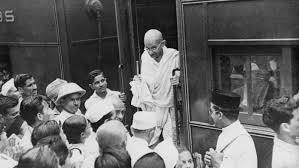
Gandhi returned to India in 1915 at the urging of his mentor, Gopal Krishna Gokhale. He spent a year traveling the country in third-class railway carriages to understand the “real India”—the villages.
- Champaran and Kheda (1917–1918): His first major victories in India involved fighting for indigo farmers and peasants burdened by illegal taxes. These campaigns turned him into a folk hero.
- The Khilafat Movement: Gandhi showed his genius for unity by supporting the Khilafat movement, bringing Hindus and Muslims together against British rule.
4.The Era of Mass Movements
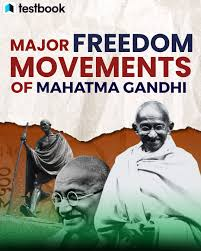
Gandhi transformed the Indian National Congress from an elite debating society into a mass movement.
- Non-Cooperation Movement (1920): He urged Indians to boycott British goods, schools, and offices. He famously promoted the Charkha (spinning wheel) to encourage self-reliance. However, when the movement turned violent at Chauri Chaura in 1922, Gandhi did the unthinkable: he called off the entire national protest, prioritizing his principles over political gain.
- The Salt March (1930): Perhaps his most iconic act. By marching 240 miles to the sea to make a pinch of salt, he defied the British salt tax. This simple act of “civil disobedience” captured the world’s imagination and shook the foundations of the British Empire.
5. The Philosophy of Satyagraha and Ahimsa
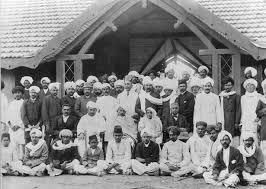
To understand Gandhi, one must understand his “Experiments with Truth.”
- Ahimsa (Non-violence): For Gandhi, non-violence was not cowardice. It was the “summit of bravery.” He believed that responding to hate with hate only doubled the darkness.
- Sarvodaya (Welfare for All): He envisioned a society built on village autonomy and economic equality.
- Brahmacharya: His later years involved intense self-discipline and experiments in celibacy, which remain a subject of historical debate, but were, for him, a means of attaining spiritual power for the nation’s cause.
6. The Final Struggle: “Quit India” and Partition
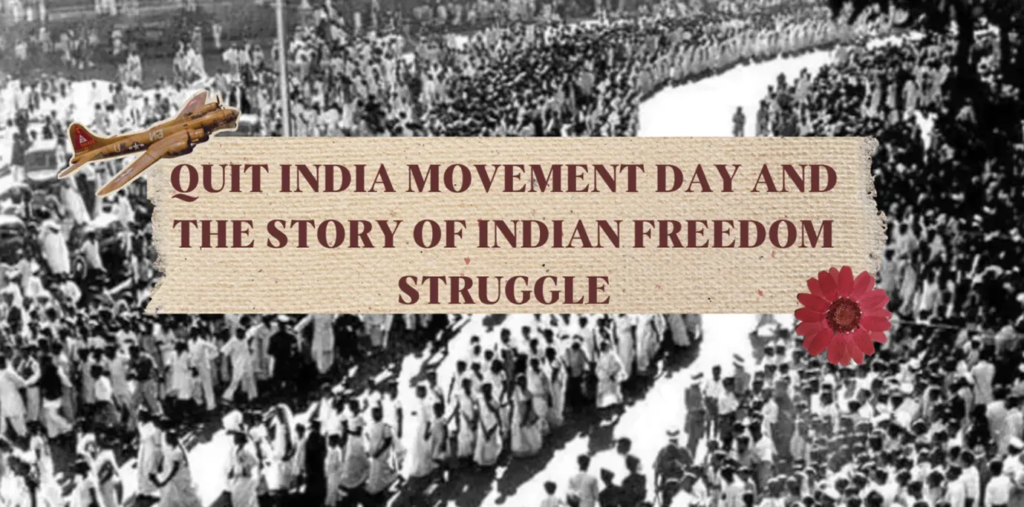
In 1942, during the height of WWII, Gandhi launched the Quit India Movement, giving the slogan “Do or Die.” The British responded by arresting the entire Congress leadership.
As independence neared, Gandhi’s greatest heartbreak was the looming Partition. While politicians argued in Delhi, Gandhi walked barefoot through the riot-torn villages of Noakhali, using his presence to stop communal massacres. He called the partition a “spiritual tragedy.”
7. Martyrdom and Global Legacy
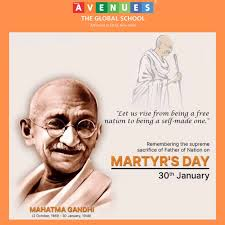
On January 30, 1948, Gandhi was assassinated by Nathuram Godse, a Hindu extremist. His last words were reportedly “He Ram” (Oh God).
His death sparked a global mourning. Albert Einstein famously said of him, “Generations to come will scarce believe that such a one as this ever in flesh and blood walked upon this earth.”
Gandhi’s influence did not end in 1948. His tactics were the blueprint for:
- Martin Luther King Jr. during the American Civil Rights Movement.
- Nelson Mandela in the fight against Apartheid.
- The Green Movement and advocates for sustainable living.
Conclusion: The Relevance of Gandhi Today
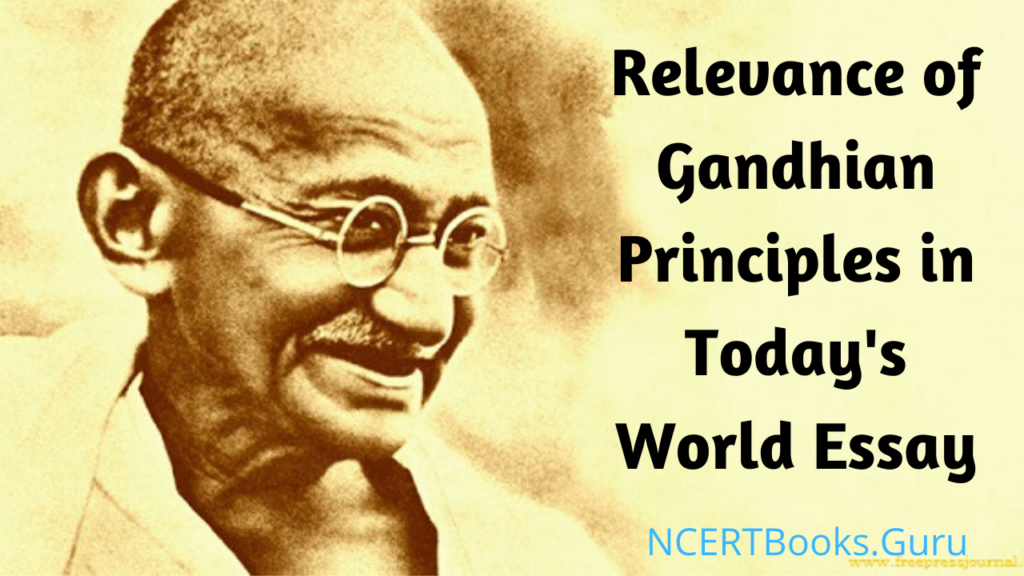
In an age of digital polarization and global conflict, Gandhi’s message of dialogue over destruction is more relevant than ever. He proved that an individual, armed only with a sense of justice and a willingness to suffer for it, could bring the world’s greatest empire to its knees. He remains a symbol of the “small voice” that can change the world.
Would you like me to expand on a specific section—such as his time in South Africa or his economic views—to bring this closer to a full-length chapter?
Leave a Reply