Introduction
Indira Gandhi was one of the most powerful and influential political leaders in modern India. Serving as Prime Minister for multiple terms between 1966–1977 and 1980–1984, she shaped the nation’s political direction with bold decisions, strong leadership, and controversial policies. As India’s first and only woman Prime Minister, she broke gender barriers while leaving behind a complex and debated legacy.
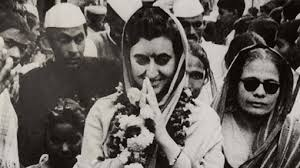
Indira Gandhi was born on November 19, 1917, into the prominent Nehru family. Her father, Jawaharlal Nehru, played a central role in India’s independence movement, and her upbringing was deeply influenced by nationalist ideals.
Growing up during the freedom struggle, she witnessed political arrests, protests, and the sacrifices made by leaders. This exposure shaped her resilience and interest in politics. She later became actively involved in the Indian National Congress, eventually rising within its ranks.
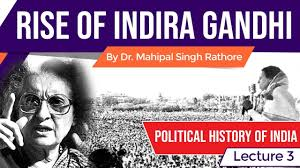
After the death of Lal Bahadur Shastri in 1966, Indira Gandhi was chosen as Prime Minister. Initially underestimated by senior party leaders, she was labeled a weak figure. However, she quickly proved her leadership abilities by asserting independence and consolidating power within the government and the Congress party.
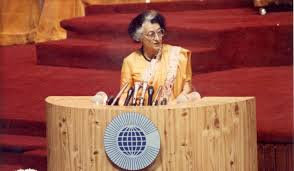
One of Indira Gandhi’s major contributions was her focus on economic reform aimed at reducing poverty. She adopted socialist-oriented policies to strengthen state control over key sectors.
A landmark decision was the nationalization of major banks in 1969. This move aimed to ensure that financial resources reached rural areas, farmers, and small industries. It strengthened her pro-poor image and increased her popularity among the masses.
Her famous slogan “Garibi Hatao” (Eradicate Poverty) became a central theme of her political campaigns. Various welfare programs and land reforms were introduced, though their success remains debated.INDIRA GHANDHI(1917)
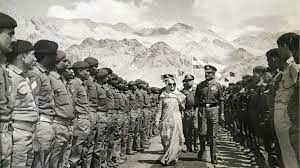
Indira Gandhi’s leadership reached its peak during the 1971 Indo-Pakistani War. Her decisive actions led to the creation of Bangladesh.
She handled the refugee crisis and provided support to the Bengali liberation movement. India’s victory enhanced her global reputation, and she was seen as a strong and decisive leader. This period marked the height of her popularity.INDIRA GHANDHI(1917)
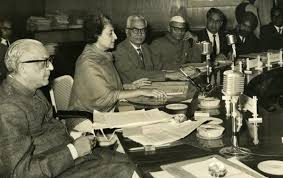
Indira Gandhi’s leadership style was characterized by strong centralization. Decision-making became concentrated in the Prime Minister’s office, reducing the influence of party leaders and institutions.
While this allowed quick implementation of policies, it also weakened democratic processes and reduced internal party democracy within the Congress.
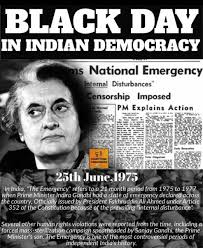
The most controversial phase of her leadership was the declaration of the The Emergency in India.
Facing political opposition and a court ruling against her election, Indira Gandhi imposed Emergency rule in 1975. During this period:
- Civil liberties were suspended
- Political opponents were jailed
- Press censorship was enforced
Although some supporters claim it brought discipline and economic stability, critics consider it a major attack on democracy. Forced sterilization campaigns and slum demolitions further damaged her image.
Electoral Defeat and Comeback
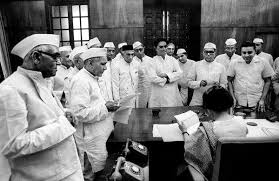
In 1977, Indira Gandhi called for elections but suffered a major defeat as the Congress party lost power. This marked the first time a non-Congress government ruled India.
However, her political resilience was remarkable. She rebuilt her support base and returned to power in 1980 with a strong mandate, demonstrating her enduring influence over Indian politics.
Challenges in the Later Years
During her second term, Indira Gandhi faced serious internal challenges, including regional unrest and separatist movements.
One of the most critical issues was the insurgency in Punjab. In 1984, she ordered Operation Blue Star to remove militants from the Golden Temple.
Although the operation achieved its objective, it caused significant damage and angered the Sikh community, leading to severe political consequences.
Assassination and Aftermath
On October 31, 1984, Indira Gandhi was assassinated by her own bodyguards in retaliation for Operation Blue Star.
Her death led to widespread anti-Sikh riots across India, causing immense loss of life and property. This tragic event marked a turning point in India’s political and social history.
Foreign Policy and Global Role
Indira Gandhi played a significant role in strengthening India’s global position. She followed a policy of non-alignment but maintained close relations with the Soviet Union during the Cold War.
Her leadership during international crises and her firm diplomatic stance enhanced India’s reputation as a strong and independent nation.
Contributions to Science and National Development
Under her leadership, India made significant progress in science and technology. A notable achievement was the 1974 nuclear test, which established India as a nuclear-capable nation.
She also supported industrial growth, agricultural development, and infrastructure expansion, contributing to India’s long-term progress.
Leadership Style
Indira Gandhi was known for her strong, decisive, and sometimes authoritarian leadership style. She relied on a close circle of advisors and often made bold decisions independently.
Her ability to take risks and act decisively helped her handle crises effectively, but it also led to criticism for weakening democratic institutions.
Legacy
Indira Gandhi’s legacy is complex and multifaceted. She is remembered as:
- A strong and decisive leader
- A champion of the poor
- A central figure in shaping modern India
At the same time, she is criticized for:
- Imposing the Emergency
- Centralizing power
- Undermining democratic processes
Conclusion
Indira Gandhi remains one of the most significant political leaders in Indian history. Her tenure was marked by major achievements as well as serious controversies.
As a leader, she demonstrated courage, determination, and political skill, but her actions also highlighted the dangers of excessive concentration of power. Her life continues to serve as both an inspiration and a cautionary example in the study of political leadership.
| Feature | Details |
| Full Name | Indira Priyadarshini Gandhi (née Nehru) |
| Birth | 19 November 1917, Allahabad, India |
| Parents | Jawaharlal Nehru (1st PM of India) & Kamala Nehru |
| Spouse | Feroze Gandhi (m. 1942; d. 1960) |
| Children | Rajiv Gandhi, Sanjay Gandhi |
| Political Party | Indian National Congress |
| Tenure as PM | 24 Jan 1966 – 24 March 1977; 14 Jan 1980 – 31 Oct 1984 |
| Key Achievements | Led 1971 war (created Bangladesh), Green Revolution, Bank Nationalization |
| Key Controversies | 1975-1977 National Emergency, Operation Blue Star |
| Nicknames | Iron Lady of India, Mother Indira |
| Awards | Bharat Ratna (1971) |
Leave a Reply