Birth Place: Rameswaram, Tamil Nadu, India
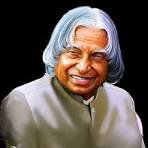
A. P. J. Abdul Kalam
Avul Pakir Jainulabdeen Abdul Kalam, popularly known as A. P. J. Abdul Kalam, was one of India’s most respected scientists and the 11th President of India. Revered as the “Missile Man of India,” he played a pivotal role in shaping the country’s space and defense capabilities. Beyond his scientific achievements, Kalam became a symbol of humility, vision, and inspiration, especially for young people. His life story—from a modest childhood to the highest constitutional office in India—is a powerful testament to perseverance, education, and dedication to national service.
Early Life and Family Background
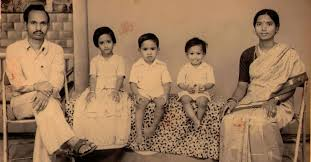
A. P. J. Abdul Kalam was born on October 15, 1931, in the small town of Rameswaram, located on Pamban Island in the southern state of Tamil Nadu. His father, Jainulabdeen, was a boat owner and imam at a local mosque, while his mother, Ashiamma, was a homemaker known for her kindness and generosity. Kalam grew up in a close-knit, modest Muslim family that valued discipline, faith, and compassion.
Despite financial challenges, Kalam’s parents ensured that he received a good education. As a child, he was curious, hardworking, and deeply interested in learning. To support his family, young Kalam sold newspapers after school. This early experience instilled in him a strong work ethic and sense of responsibility.
Education and Early Aspirations
Kalam attended Schwartz Higher Secondary School in Ramanathapuram, where he developed a keen interest in science and mathematics. His teachers recognized his potential and encouraged him to pursue higher education. One of his mentors, Iyadurai Solomon, played a crucial role in shaping his character and instilling confidence.
He went on to study physics at St. Joseph’s College, Tiruchirappalli, graduating in 1954. However, Kalam soon realized that his true passion lay in engineering. He then enrolled at Madras Institute of Technology (MIT), where he specialized in aeronautical engineering. It was here that his fascination with flight and aerospace technology took root.
At MIT, Kalam worked on a project to design a small aircraft. His dedication and determination impressed his professors, and this experience laid the foundation for his future career in aerospace and defense.
Early Career and Entry into DRDO and ISRO
After completing his education, Kalam joined the Defence Research and Development Organisation (DRDO) in 1958. Initially, he worked on designing small hovercrafts, but he found the work less fulfilling than he had hoped. His career took a significant turn when he joined the Indian Space Research Organisation (ISRO) in 1969.
At ISRO, Kalam became the project director of India’s first indigenous satellite launch vehicle, the SLV-III. Under his leadership, the SLV-III successfully deployed the Rohini satellite into near-Earth orbit in 1980. This achievement marked India’s entry into the spacefaring nations of the world and established Kalam as a leading figure in the country’s scientific community.
Missile Development and National Recognition
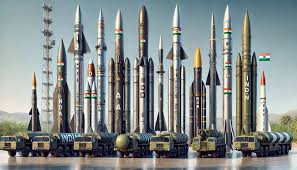
Kalam returned to DRDO in the early 1980s and became the chief executive of the Integrated Guided Missile Development Programme (IGMDP). This ambitious initiative aimed to develop a range of indigenous missiles for India’s defense.
Under his leadership, India successfully developed several key missile systems, including:
- Agni – a series of long-range ballistic missiles
- Prithvi – a tactical surface-to-surface missile
These achievements earned Kalam the nickname “Missile Man of India.” His contributions significantly strengthened India’s strategic defense capabilities and reduced reliance on foreign technology.
Role in India’s Nuclear Program
Kalam also played a crucial role in India’s nuclear tests conducted in 1998 at Pokhran. Known as the Pokhran-II nuclear tests, these tests established India as a nuclear power. Kalam served as the Chief Scientific Adviser to the Prime Minister and was instrumental in coordinating the scientific and technical aspects of the operation.
The success of Pokhran-II brought him national acclaim and further solidified his reputation as a visionary scientist and leader.
Presidency (2002–2007)
In 2002, Kalam was elected as the 11th President of India. His presidency was marked by simplicity, accessibility, and a strong focus on youth empowerment. Unlike many traditional politicians, Kalam connected deeply with students and young people, often addressing them directly and encouraging them to dream big.
He became widely known as the “People’s President” because of his approachable nature and efforts to engage with citizens across the country. During his tenure, he emphasized the importance of education, innovation, and national development.
Kalam also advocated for a vision called “India 2020,” which aimed to transform India into a developed nation through technological advancement, economic growth, and social progress.
Life After Presidency
After completing his term in 2007, Kalam continued to inspire millions through his lectures, writings, and interactions with students. He held visiting professorships at various institutions and remained actively involved in promoting education and research.
He authored several influential books, including:
- Wings of Fire – his autobiography detailing his early life and career
- Ignited Minds – focusing on empowering India’s youth
- India 2020 – outlining his vision for the nation
These works continue to inspire readers worldwide, particularly students and aspiring professionals.
Personality and Values
Kalam was known for his humility, integrity, and strong moral values. Despite his immense achievements, he lived a simple life and remained deeply grounded. He was a vegetarian, a spiritual person, and someone who believed in the unity of religions.
He often spoke about the importance of dreams, hard work, and perseverance. One of his most famous quotes is: “Dream, dream, dream. Dreams transform into thoughts and thoughts result in action.”
Kalam’s ability to connect science with spirituality and his emphasis on ethical leadership made him a unique figure in public life.
Awards and Honors
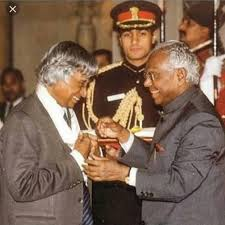
Throughout his life, Kalam received numerous awards and honors for his contributions to science and society. Some of the most notable include:
- Bharat Ratna (1997)
- Padma Vibhushan (1990)
- Padma Bhushan (1981)
He also received honorary doctorates from several universities around the world.
Death and Legacy
A. P. J. Abdul Kalam passed away on July 27, 2015, while delivering a lecture at the Indian Institute of Management Shillong. His sudden demise shocked the nation, but it also symbolized his lifelong commitment to education and youth.
Kalam’s legacy continues to live on through his contributions to science, his vision for India, and the countless lives he inspired. He remains a role model for millions, especially young people who aspire to achieve greatness through knowledge and hard work.
Conclusion
The life of A. P. J. Abdul Kalam is a remarkable journey of determination, innovation, and service. From a humble beginning in Rameswaram to becoming the President of India, he exemplified the power of dreams and the importance of perseverance. His contributions to India’s space and defense programs transformed the nation’s technological landscape, while his teachings continue to inspire generations.
Kalam’s story is not just a biography—it is a source of motivation. It reminds us that with dedication, humility, and a clear vision, anyone can overcome obstacles and make a meaningful impact on society.
https://ritacharitabletrust.com/wp-admin/post.php?post=190&action=edit
Leave a Reply