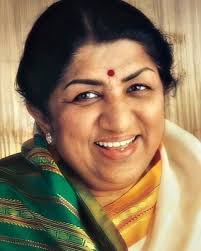
Lata MangeskerLata Mangeshkar, often referred to as the “Nightingale of India,” remains one of the most iconic and influential figures in the history of Indian music. Her voice, delicate yet powerful, has transcended generations, languages, and cultural boundaries. With a career spanning over seven decades, she not only defined the golden era of Indian playback singing but also became a symbol of artistic excellence and national pride.Lata Mangesker(1929)
Born on September 28, 1929, in Indore, India, Lata Mangeshkar was the eldest child in a family deeply rooted in music and theater. Her father, Pandit Deenanath Mangeshkar, was a renowned classical singer and stage actor, and he played a crucial role in shaping her early musical training. From a very young age, Lata showed exceptional talent and discipline, absorbing the nuances of classical music with remarkable ease. However, her childhood was not without hardship. After her father’s untimely death in 1942, Lata, still in her early teens, took on the responsibility of supporting her family. This moment marked the beginning of her long and determined journey in the world of music.
Lata initially faced rejection in the film industry. At that time, the prevailing style favored heavier, more robust voices, whereas her voice was soft, high-pitched, and ethereal. Music directors were hesitant to accept this new sound. However, her persistence, combined with her dedication to improving her craft, eventually paid off. Her breakthrough came in the late 1940s with songs that showcased her unique vocal quality and emotional depth. One of her early hits, “Aayega Aanewala” from the film Mahal (1949), captivated audiences and established her as a rising star.
The 1950s and 1960s marked the golden period of Lata Mangeshkar’s career. During this time, she collaborated with legendary music directors such as Naushad, S.D. Burman, Shankar-Jaikishan, and Madan Mohan. Her ability to adapt her voice to suit different actresses, characters, and emotional contexts made her indispensable to the film industry. Whether it was a romantic melody, a devotional bhajan, or a sorrowful lament, Lata infused every note with sincerity and precision.
One of the most remarkable aspects of Lata Mangeshkar’s singing was her impeccable diction and versatility across languages. Although she primarily sang in Hindi, she recorded songs in over 30 languages, including Bengali, Marathi, Tamil, Telugu, Kannada, and Gujarati. This linguistic adaptability allowed her to connect with audiences across India and beyond. Her Bengali songs, in particular, are highly cherished and demonstrate her deep respect for regional musical traditions.
Her collaboration with her younger sister, Asha Bhosle, also a legendary singer in her own right, is a significant chapter in Indian music history. While the two had different styles—Lata being known for her purity and emotional depth, and Asha for her versatility and playful experimentation—their combined contributions enriched the musical landscape of Indian cinema.
Throughout her career, Lata Mangeshkar worked with some of the greatest composers and lyricists, creating songs that have become timeless classics. Her association with composer Madan Mohan produced some of the most hauntingly beautiful ghazals in Hindi cinema. Similarly, her work with S.D. Burman and later with his son R.D. Burman resulted in a range of memorable songs that showcased her adaptability to changing musical trends.
Lata’s voice became synonymous with the leading actresses of her time. From Nargis and Madhubala to Meena Kumari and later generations of actresses, her singing gave life to countless on-screen performances. Her ability to convey complex emotions—joy, sorrow, longing, devotion—made her voice an essential storytelling tool in Indian films.
One of her most iconic songs, “Ae Mere Watan Ke Logon,” performed in 1963, holds a special place in the hearts of Indians. Sung as a tribute to soldiers who lost their lives in the Sino-Indian War, the song moved then-Prime Minister Jawaharlal Nehru to tears. This performance solidified her status not just as a playback singer but as a voice of the nation.
Over the decades, Lata Mangeshkar received numerous awards and honors in recognition of her extraordinary contributions to music. She was awarded the Bharat Ratna, India’s highest civilian honor, in 2001. In addition, she received multiple National Film Awards, Filmfare Awards, and international recognitions. Her achievements also earned her a place in the Guinness World Records for having recorded one of the highest numbers of songs in history, though exact figures have been debated.
Despite her immense fame, Lata Mangeshkar was known for her humility and disciplined lifestyle. She maintained a strong sense of professionalism and was deeply committed to her art. She rarely sought the limelight outside her work and preferred to let her music speak for itself. Her dedication to perfection often meant long hours of practice and meticulous attention to detail during recordings.
As the music industry evolved, Lata adapted gracefully to changing times. While the 1980s and 1990s saw the rise of new voices and styles, she continued to deliver memorable songs that resonated with audiences. Even as she reduced her workload in later years, her presence remained deeply influential. Younger singers looked up to her as a mentor and an ideal, striving to emulate her clarity, expression, and technical mastery.
Lata Mangeshkar’s influence extends beyond music. She played a significant role in shaping the standards and expectations of playback singing in India. Her insistence on fair compensation and proper recognition for singers contributed to improving the professional status of playback artists in the film industry. She was also known for her philanthropic efforts, supporting various charitable causes, including healthcare and education.
Her passing on February 6, 2022, marked the end of an era. The nation mourned her loss with deep sorrow, and tributes poured in from across the world. Political leaders, musicians, actors, and fans paid homage to a voice that had become an integral part of their lives. Her funeral was conducted with full state honors, reflecting the immense respect and admiration she commanded.
Even after her passing, Lata Mangeshkar’s legacy continues to thrive. Her songs remain a constant presence in Indian households, played during celebrations, rituals, and moments of nostalgia. Digital platforms have introduced her music to new generations, ensuring that her voice will continue to inspire and comfort listeners for years to come.
In conclusion, Lata Mangeshkar was not just a singer; she was a cultural phenomenon whose voice defined the emotional landscape of Indian cinema for decades. Her journey from a young girl facing adversity to becoming one of the most revered artists in the world is a testament to her talent, resilience, and unwavering dedication. Through her music, she created a timeless bond with her audience, one that transcends time and space. Her voice, pure and eternal, will forever echo in the hearts of millions, making her truly immortal in the world of music.
Leave a Reply