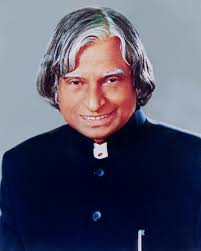
APJ ABDUL KALAM AZAD 2026 A. P. J. Abdul Kalam—widely known as the “Missile Man of India”—was one of the most respected scientists and leaders in Indian history. His life story is not just a biography of achievements but a powerful example of determination, humility, and service to the nation. Born into modest circumstances, Kalam rose to become the 11th President of India and an inspiration to millions, especially young people.
Early Life and Background
Avul Pakir Jainulabdeen Abdul Kalam was born on October 15, 1931, in Rameswaram, a small island town known for its religious significance. His father, Jainulabdeen, was a boat owner and imam of a local mosque, while his mother, Ashiamma, was a homemaker. Kalam grew up in a financially modest but spiritually rich household. His parents emphasized values like honesty, discipline, and compassion, which deeply influenced his personality.
As a child, Kalam was curious and hardworking. To support his family, he sold newspapers after school. Despite financial challenges, he showed a strong interest in studies, especially mathematics and science. His teachers recognized his potential early and encouraged him to pursue higher education.
Education and Early Career
Kalam completed his schooling in Rameswaram and later attended St. Joseph’s College, where he graduated in Physics. However, his passion for engineering led him to pursue aerospace engineering at the Madras Institute of Technology. At MIT, Kalam faced intense academic pressure, but he proved his dedication through hard work and innovation.
After graduating in 1960, Kalam joined the Defence Research and Development Organisation (DRDO) as a scientist. Initially, he worked on small projects, including designing a hovercraft. Though he found the work less fulfilling, it laid the foundation for his future contributions.
Career at ISRO and Space Achievements
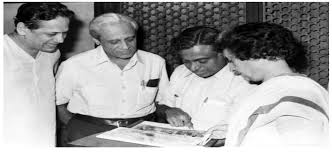
Kalam’s career took a significant turn when he joined the Indian Space Research Organisation (ISRO) in 1969. At ISRO, he played a key role in India’s space program. One of his most notable achievements was serving as the Project Director for the development of India’s first indigenous satellite launch vehicle, SLV-III.
In 1980, the SLV-III successfully deployed the Rohini Satellite into near-Earth orbit. This achievement marked India’s entry into the space club and established Kalam as a leading scientist.
His work at ISRO was characterized by innovation, teamwork, and perseverance. Kalam believed in empowering young scientists and creating a collaborative environment, which contributed significantly to India’s scientific progress.
Missile Development and “Missile Man” Title
After his success at ISRO, Kalam returned to DRDO and became the chief executive of the Integrated Guided Missile Development Programme (IGMDP). Under his leadership, India developed several advanced missile systems, including:
- Agni
- Prithvi
These achievements earned him the nickname “Missile Man of India.” Kalam’s contributions significantly strengthened India’s defense capabilities and established the country as a technological power.
He also played a crucial role in India’s nuclear tests conducted in 1998 at Pokhran, known as the Pokhran-II nuclear tests. These tests marked India’s emergence as a nuclear-armed nation and showcased Kalam’s strategic importance in national security.
Presidency (2002–2007)
In 2002, Kalam was elected as the 11th President of India. He was widely known as the “People’s President” because of his approachable nature and deep connection with citizens, especially students.
Unlike many politicians, Kalam came from a scientific background, which made his presidency unique. During his tenure, he focused on:
- Promoting education and innovation
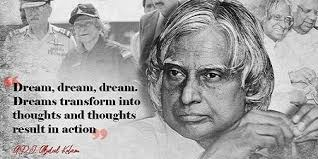
- Encouraging youth to dream big
- Advocating for national development through technology
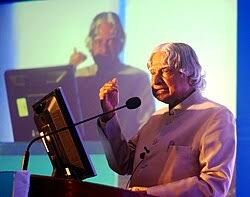
Kalam frequently visited schools and colleges, interacting directly with students. He believed that young minds were the key to India’s future and constantly motivated them to pursue knowledge and creativity.
Vision for India
Kalam had a clear vision for India’s future, which he outlined in his book India 2020. He envisioned India as a developed nation driven by technology, innovation, and self-reliance.
His vision included:
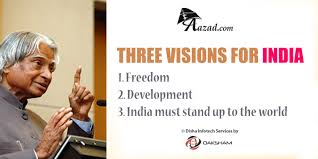
- Advancing science and technology
- Improving education and healthcare
- Strengthening infrastructure
- Achieving economic independence
Kalam emphasized the importance of integrating science with social development. He believed that technological progress should benefit all sections of society, especially the underprivileged.
Personal Life and Character
Despite his achievements, Kalam remained humble and simple throughout his life. He lived a disciplined lifestyle and avoided luxury. He never married and dedicated his entire life to the nation.
Kalam was also deeply spiritual. He respected all religions and believed in unity and harmony. He often quoted from religious texts like the Bhagavad Gita and the Quran, promoting a message of peace and coexistence.
His simplicity was reflected in his daily habits—he preferred simple food, modest clothing, and minimal possessions. Even as President, he maintained a down-to-earth lifestyle that earned him widespread admiration.
Contributions to Education and Youth
After completing his presidency in 2007, Kalam continued to inspire people as a teacher and mentor. He held visiting positions at various institutions, including the Indian Institute of Management Ahmedabad and Indian Institute of Management Shillong.
He spent much of his time interacting with students, delivering lectures, and encouraging innovation. Kalam believed that education should not just impart knowledge but also build character and creativity.
His speeches often focused on:
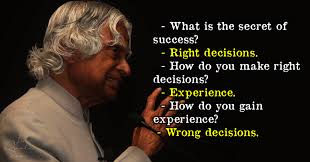
- Dreaming big and setting goals
- Developing a scientific mindset
- Building self-confidence
- Serving the nation
Awards and Honors
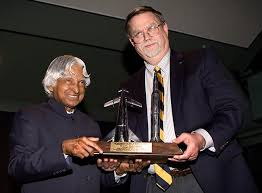
Kalam received numerous awards for his contributions to science and public service. Some of the most notable include:
- Bharat Ratna (1997)
- Padma Bhushan (1981)
- Padma Vibhushan (1990)
These awards recognized his exceptional contributions to India’s defense and space programs.
Death and Legacy
On July 27, 2015, Kalam passed away while delivering a lecture at the Indian Institute of Management Shillong. His sudden demise shocked the nation, but it also symbolized his lifelong commitment to education and youth.
Kalam’s legacy continues to inspire millions. He is remembered not just as a scientist or president, but as a visionary leader who dedicated his life to the betterment of society.
His life teaches us that success is not determined by one’s background but by determination, hard work, and a clear vision. From a small town in Rameswaram to the highest office in India, Kalam’s journey is a testament to the power of dreams.
Conclusion
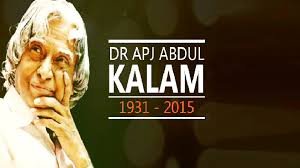
The biography of A. P. J. Abdul Kalam is a story of perseverance, innovation, and service. He transformed India’s scientific landscape and inspired generations to believe in their potential. His contributions to space research, defense technology, and education have left an indelible mark on the nation.
More importantly, Kalam’s life serves as a moral guide. His humility, integrity, and dedication remind us of the values that truly define greatness. Even today, his words continue to motivate people to strive for excellence and work towards building a better future.
In every sense, A. P. J. Abdul Kalam was not just a leader—he was a teacher, a visionary, and a true servant of the people.
Leave a Reply