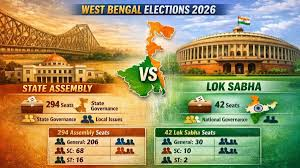
introduction
The 2026 Bidhan Sabha (Legislative Assembly) election in West Bengal is expected to be one of the most closely watched political events in India. As a politically vibrant and historically significant state, West Bengal has long played a central role in shaping national political discourse. The upcoming election will not only determine the state’s leadership for the next five years but also influence the broader political balance in the country.The 2026 Bidhan Sabha (Legislative Assembly) election in West Bengal
The electoral contest is likely to revolve around key issues such as governance, development, employment, welfare schemes, and political ideology. Major political parties will attempt to consolidate their voter bases while also appealing to undecided voters through campaigns, alliances, and policy promises.
Political Background of West Bengal
The 2026 Bidhan Sabha (Legislative Assembly) election in West Bengal
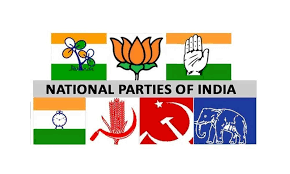
However, in 2011, a major political transformation occurred when Mamata Banerjee and her party, the All India Trinamool Congress (TMC), came to power, ending Left rule. Since then, TMC has maintained dominance in the state, winning successive elections in 2016 and 2021.
Meanwhile, the Bharatiya Janata Party (BJP) has emerged as a strong opposition force, significantly increasing its vote share and seat count in recent years. The Congress and Left parties continue to exist but have struggled to regain their earlier influence.The 2026 Bidhan Sabha (Legislative Assembly) election in West Bengal
Importance of the 2026 Election

The 2026 Bidhan Sabha election is significant for several reasons. First, it will determine whether the incumbent government retains power or if the opposition can successfully challenge its dominance. Second, it will serve as a test of political strategies ahead of future national elections.
Additionally, The 2026 Bidhan Sabha (Legislative Assembly) election in West Bengalthe election will reflect public sentiment on governance, economic conditions, and social welfare policies. It will also highlight how effectively political parties address grassroots issues such as unemployment, education, healthcare, and infrastructure development.
Major Political Parties and Alliances
1. All India Trinamool Congress (TMC)
The ruling TMC, led by Mamata Banerjee, is expected to focus on its governance record, welfare schemes, and regional identity. Popular initiatives like “Kanyashree,” “Lakshmir Bhandar,” and infrastructure development projects may be central to its campaign.The 2026 Bidhan Sabha (Legislative Assembly) election in West Bengal
2. Bharatiya Janata Party (BJP)
The BJP will likely campaign on issues of national integration, development, and alleged governance gaps. The party may also highlight central government schemes and attempt to expand its support base in rural and minority areas.
3. Left Front and Congress Alliance
The 2026 Bidhan Sabha (Legislative Assembly) election in West BengalThe Left Front and Congress may attempt to revive their influence through alliances and joint campaigns. They are expected to focus on issues like unemployment, price rise, and democratic rights.
4. Regional and Smaller Parties
Smaller regional parties and independent candidates may also play a role, especially in closely contested constituencies.
Key Issues in the Election
1. Employment and Economy
Unemployment remains a major concern among the youth. Political parties are expected to present plans for job creation, industrial growth, and investment in the state.The 2026 Bidhan Sabha (Legislative Assembly) election in West Bengal
2. Welfare Schemes
Welfare programs targeting women, farmers, and marginalized communities will be a major campaign focus. The effectiveness and reach of these schemes will influence voter decisions.
3. Law and Order
Law and order, including political violence and public safety, is often a debated topic in West Bengal elections. Parties may use this issue to criticize opponents and propose reforms.
4. Infrastructure Development
Roads, transportation, healthcare facilities, and urban development projects will also be key talking points.
5. Education and Healthcare
Improving the quality of education and access to healthcare services will be important concerns for voters, especially in rural areas.
Role of the Election Commission
The 2026 Bidhan Sabha (Legislative Assembly) election in West Bengal
The Election Commission of India plays a crucial role in conducting free and fair elections. It is responsible for scheduling the election, ensuring transparency, deploying security forces, and monitoring the electoral process.
Measures such as electronic voting machines (EVMs), voter awareness campaigns, and strict enforcement of the Model Code of Conduct help maintain the integrity of the election.The 2026 Bidhan Sabha (Legislative Assembly) election in West Bengal
Campaign Strategies
Political parties are expected to adopt a mix of traditional and modern campaign strategies:
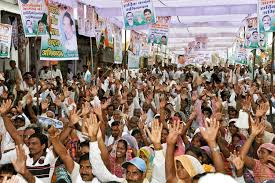
- Public rallies and roadshows to connect with voters directly
- Social media campaigns to reach younger audiences
- Door-to-door canvassing for grassroots engagement
- Manifestos and promises outlining policy goals
Leaders from national and regional levels will actively participate in campaigning, addressing rallies across the state.
Role of Media and Social Media

Media plays a significant role in shaping public opinion during elections. Television debates, newspaper coverage, and digital platforms provide information and analysis to voters.
Social media platforms have become powerful tools for political communication, enabling parties to share messages quickly and interact with voters. The 2026 Bidhan Sabha (Legislative Assembly) election in West BengalHowever, concerns about misinformation and fake news also require attention.
Voter Participation
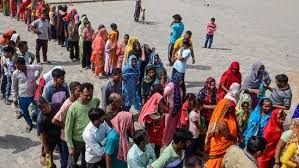
High voter turnout has been a hallmark of West Bengal elections. Citizens from various backgrounds actively participate in the democratic process.
Efforts are made to encourage participation among youth, women, and first-time voters. Awareness campaigns emphasize the importance of voting as a fundamental right and responsibility.
Challenges in the Election
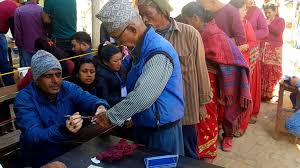
Despite strong democratic traditions, elections in West Bengal face several challenges:
- Allegations of political violence
- Ensuring free and fair polling
- Managing misinformation
- Addressing logistical issues in remote areas
Authorities work to overcome these challenges through strict monitoring and security arrangements.
Expected Outcomes and Impact
The outcome of the 2026 Bidhan Sabha election will have significant implications:
- It will determine the direction of governance in West Bengal
- It may influence national political dynamics
- It will reflect voter priorities and expectations
A decisive mandate could lead to stable governance, while a close contest may result in coalition politics or increased political competition.
Conclusion
The 2026 Bidhan Sabha election in West Bengal represents a crucial moment in the state’s political journey. With multiple parties competing for power, the election will be shaped by issues that directly impact the lives of citizens.
As voters prepare to cast their ballots, the focus will remain on development, governance, and democratic values. The election will not only decide the state’s leadership but also reaffirm the strength of India’s democratic system.
Ultimately, the voice of the people will determine the future course of West Bengal, making this election a defining event in the state’s history.
Leave a Reply